 Cleanzine: your weekly cleaning and hygiene industry newsletter 8th October 2026 Issue no. 1229
Your industry news - first
The original and best - for over 20 years!
We strongly recommend viewing Cleanzine full size in your web browser. Click our masthead above to visit our website version.


Robotic floor equipment plans double in 2026 as labour pressures persist, review finds
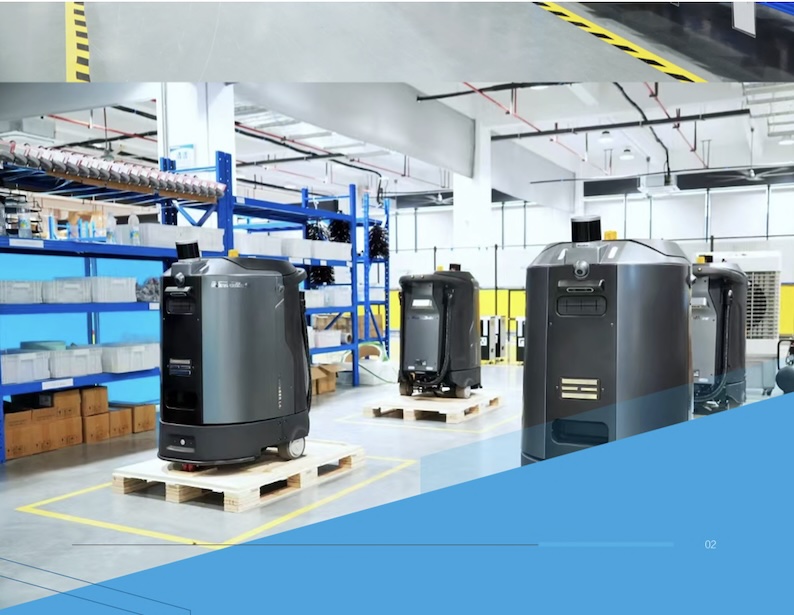 Nassco, the Wisconsin, US-based janitorial solutions and floorcare equipment provider, is highlighting new cleaning industry data showing that planned adoption of robotic floor equipment has roughly doubled from 2025. The company reviewed current and historical industry research to put the shift in practical facilities management context.
The 2026 Building Service Contractor Market Study, conducted jointly by Contracting Profits magazine and Building Service Contractors Association International, reports that around 32% of BSCs plan to adopt robotic floor equipment within the next 12 months - roughly double the share reported in 2025.
The study also found that 38.3% expect demand for automation or technology in cleaning contracts to increase, while 44.6% expect labour challenges and 72.5% expect wage or salary demands to increase.
Nassco compared those current findings with the 2019 AACEM/ISSA Autonomous Cleaning Survey, which documented how cleaning contractors, in-house service providers and facilities managers evaluated autonomous equipment earlier in the technology's adoption cycle. Among respondents who had not yet adopted autonomous cleaning equipment and were evaluating it, labour savings was cited by 77% as a purchase influence, while roughly 70% expected payback within two years.
Nassco also publishes guidance on robotic floor-cleaning equipment, covering autonomous scrubber use, repeatable routes and staffing considerations. That resource does not supply the market percentages in this news, which come from the external 2026 and 2019 studies. Because the surveys used different samples and questions, Nassco treats the older data as historical context rather than a direct trend line.
Robotic floor equipment plans doubled in 2026…
The 2026 BSC Market Study provides the current context missing from an analysis based only on the 2019 survey. Within the next 12 months, around 32% of building service contractors said they plan to adopt robotic floor equipment, about twice the percentage reported in the 2025 study.
The broader technology picture points in the same direction. The study found that 38.3% of respondents expect demand for automation or technology in contracts to increase, while 37.4% expect adoption of technologies such as IoT or robotics to increase as cleaning expectations evolve.
Those figures don't establish how many facilities currently use autonomous scrubbers, nor do they show that every contractor intends to automate floor care. They do indicate that robotics has become a more prominent part of near-term planning. For facilities deciding whether to invest, growing industry interest isn't enough on its own. The financial case still depends on repeatable floor work, equipment utilisation and whether staff time freed by automation can be redirected productively.
Labour and wage pressures keep automation relevant…
The current study also gives context for why robotic equipment is drawing attention. Among respondents, 44.6% expect labour challenges to increase in 2026, and 72.5% expect wage or salary demands to rise. At the same time, 38.3% expect customer demand for automation and technology in contracts to increase.
These figures don't prove that labour pressure is causing contractors to buy robotic equipment. They show that automation decisions are being made in an environment where many contractors expect staffing and wage pressures to remain significant. That makes the older AACEM/ISSA findings useful as historical context. In 2019, among respondents who had not yet adopted autonomous cleaning equipment and were evaluating it, labour savings was cited by 77% as a purchasing influence.
For facilities, the potential benefit doesn't necessarily come from eliminating cleaning jobs. Autonomous floor equipment can take on repeatable routes while employees handle washrooms, detailed cleaning, inspections and other tasks that require direct attention. A useful evaluation starts with the workload: how many labour hours go to repetitive floor routes, and how much of that work could realistically be automated?
Rising costs put more pressure on payback…
Technology interest is increasing while contractors also expect operating costs to rise. The 2026 BSC Market Study found that 69.0% expect the overall cost of cleaning to increase, while 82.3% expect the cost of supplies and doing business to rise.
That makes return on investment more important. A facility considering robotic floor equipment has to weigh potential labour and productivity gains against acquisition cost, maintenance, training, service requirements and utilisation.
The 2019 AACEM/ISSA survey provides a historical benchmark. Among respondents who hadn't yet adopted autonomous cleaning equipment, 27% expected payback within 12 months, 23% within 13 to 18 months, and 20% within 19 to 24 months. Combined, roughly 70% expected recovery within two years.
Those figures are expectations from 2019, not measured 2026 returns. Equipment capabilities, pricing, labour costs and facility requirements have changed. They shouldn't be used to promise that a current autonomous scrubber will recover its cost within 24 months. The useful takeaway is the framework: labour savings and payback were central questions in 2019, and the 2026 data shows why they remain relevant as robotic equipment plans and operating costs rise.
Scrubbers were an early focus of autonomous cleaning…
Thesecond part of the 2019 AACEM/ISSA survey analysisalso helps explain why robotic floorcare equipment remains prominent in the current discussion. Among organisations that had adopted autonomous cleaning technology, 89% reported using scrubbers. Vacuums were reported by 46%, while 32% used large-area sweepers. Nassco's currentautonomous floor scrubber resourcesprovide current product and application context for facilities evaluating that equipment category.
Floor scrubbing can lend itself to automation because many applications involve recurring routes across predictable surfaces. Large corridors, warehouses, institutional floors and retail areas can offer more consistent operating conditions than small rooms with frequent layout changes.
The result doesn't mean robotic scrubbers are appropriate everywhere. Furniture, obstacles, changing layouts, narrow spaces and specialised cleaning requirements can reduce usable autonomous floor area. For a small or mid-sized facility, the key measure is the amount of repeatable, accessible floorcare work that can be assigned to the machine often enough to justify the investment.
Nassco puts the market data into facility context…
Nassco's robotic floor cleaning guidance focuses on practical facility fit. The company advises facilities to consider where autonomous equipment can operate consistently, how often it will be used and whether time freed from repetitive floor work can be redirected to other cleaning priorities.
Facilities can then estimate the workload that could realistically move to robotic equipment and consider the resulting labour or productivity value alongside equipment cost, maintenance, training, service, consumables and downtime. Higher industry adoption alone doesn't establish a positive return.
Utilisation is especially important. A robotic scrubber assigned to repeatable routes throughout the week presents a different financial case from one that remains idle because the building has too little suitable floor area or requires frequent manual intervention. If time saved on repetitive floor work can be redirected to detailed cleaning, sanitation or inspections, the value may appear as improved productivity rather than a direct reduction in headcount.
Methodology…
Nassco reviewed and synthesised findings from two separate industry studies. The primary current source is the 2026 Building Service Contractor Market Study, conducted jointly by Contracting Profits magazine and BSCAI. The survey sample was drawn from 12,952 Contracting Profits subscribers and BSCAI database contacts with valid email addresses. Data was collected from March 9th through April 6th, 2026, with 181 participants and a reported margin of error of plus or minus 7.2% at the 95% confidence level.
The review also uses the 2019 AACEM/ISSA Autonomous Cleaning Surveyas historical context. ISSA and AACEM distributed that survey to nearly 23,000 building service contractors, in-house service providers and facility or property managers. It received 250 complete responses, with a reported margin of error of 6% at the 95% confidence level.
Because the studies used different respondent populations, questionnaires and time periods, Nassco doesn't treat their percentages as directly comparable longitudinal measures. The 2026 study establishes current contractor expectations and technology plans, while the 2019 study provides historical context around payback expectations, purchase drivers and early autonomous-equipment use. No proprietary Nassco survey or original research was conducted.
17th September 2026