 Cleanzine: your weekly cleaning and hygiene industry newsletter 4th June 2026 Issue no. 1213
Your industry news - first
The original and best - for over 20 years!
We strongly recommend viewing Cleanzine full size in your web browser. Click our masthead above to visit our website version.


White Paper will help warehouses and fulfilment centres reduce costs by repairing not replacing
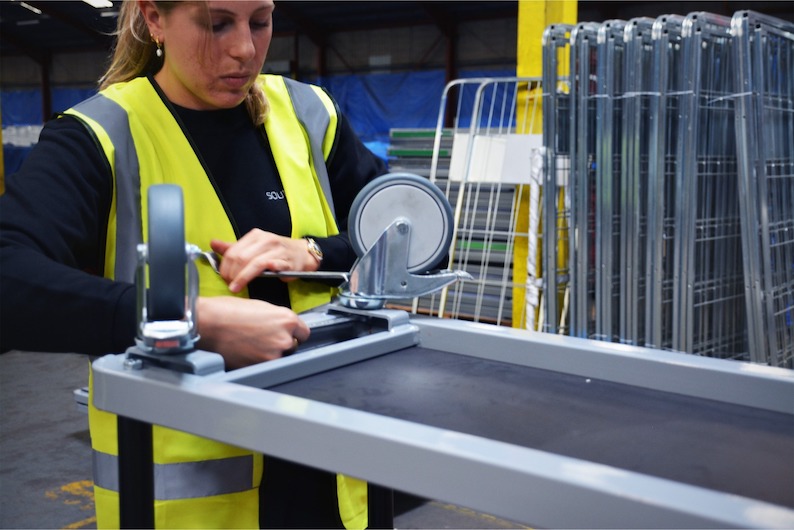 Southgate Global, a leading specialist in servicing, is helping warehouses and fulfilment centres cut costs and their carbon footprints..
Southgate's White Paper outlines the benefits of repairing instead of replacing key equipment used in moving goods around a warehouse as well as the receiving and storing of inventory, picking and packing of goods, shipping of orders, and handling of returns at fulfilment centres
Major shifts in power, significant overhaul of economic policies and global conflicts so far in 2025 have influenced the international supply chain, leading to increased costs, delays and even shortages of certain goods and raw materials. As a result, organisations are looking for ways to streamline operations to best mitigate these impacts and keep goods flowing.
Maintaining operational efficiency in both the warehouse and in distribution centres now plays a crucial role in business profitability. However, rapid SKU (Stock-Keeping Unit) turnover and seasonal volume surges mean damaged carts, cages or trolleys can quickly bottleneck operations, leading to unexpected downtime and slowed operations.
Recognising this, Southgate Global's latest White Paper is helping organisations understand when to repair instead of replace damaged equipment, and the importance of regular servicing in pre-empting equipment failure.
Last year alone, Southgate repaired more than 200,000 carts and trolleys that would otherwise have been written off, helping its customers extend the life of their equipment, minimising downtime, and substantially reducing their CAPEX (Capital Expenditure). Its repair-first maintenance programme also created £40million of CAPEX savings in a single year for one customer and made a real contribution to that customer's sustainability targets.
This is the latest in a series of White Papers produced by Southgate aimed at helping businesses create a more resilient and cost-effective operation. It sets out the seven key benefits of repairing equipment, a checklist process for organisations to use, and provides a calculator to enable businesses to work out when repairing is the most cost-effective option over replacement.
Titled ‘Repair or Replace? A Southgate Global White Paper on the ESG and CAPEX advantages of extending equipment life for 3PLs’, the publication focuses on helping organisations identify when to repair or replace damaged parts and machinery. It also encourages them to think more broadly about the type of equipment that can be efficiently maintained and repaired, through a scalable servicing package and proactive maintenance tailored to contract-critical operations provided by Southgate Global.
John Maher, head of fulfilment servicing at Southgate Global, explains:
"Carts and trolleys, indeed any manual handling equipment, are integral to every warehouse operation, no matter the sector. But they're often perceived as low value and, as a result, are frequently replaced at the first sign of wear.
"There is a danger when taking this approach. Often, the financial cumulative cost of replacements is not factored in. For example, replacing equipment incurs not only the capital cost of new assets but also additional expenses related to transportation, downtime and integration. Repairing damaged trolleys, either brakes, wheels or general servicing, is far more cost-effective than purchasing a whole new unit.
“We proved this to ourselves and our customers time and time again in all our calculations. With more than 40 expert technicians maintaining and repairing over 5,000 items of packing and material handling equipment each week across the UK and Europe, we're in a strong position to know."
The frequent replacement of equipment not only adds to an organisation's costs but can also massively undermine its ESG (Environmental, Social, and Governance) commitments. Prioritising repairs over replacements helps to extend product lifecycles, minimise resource consumption and lower an organisation's carbon footprint.
But Southgate recognises that there are times when replacement may be the more economical choice long term. Equipment can deteriorate to such a point where ongoing repairs can only provide a temporary solution, leading to mounting maintenance costs. Alongside this, older equipment often might run less efficiently, making a more energy-efficient replacement the better option long term.
In response to this, the publication contains a checklist of factors to consider such as cost, the lifecycle stage of the equipment, the wider impact on overall operations and speed when deciding to repair or replace. It has also produced an industry-first equation which provides a structured approach to weighing the costs and benefits of repair versus replacement:
A (Value of extended asset life + Operational continuity benefits) - Total repair & maintenance cost = £Value of repair
B Value of improved efficiency & reliability - Total replacement cost = £Value of replacement
If A is greater than B = Repair
If B is greater than A = Replace
Southgate's experts are on hand to support in accessing and analysing the necessary data to input into the equation. Its team has the technical expertise to calculate the cost and value of repairing and renovating equipment, but also the knowledge to assess the relative costs and benefits of replacing them with the latest models when more appropriate.
Download the White paper at:
11th September 2025