 Cleanzine: your weekly cleaning and hygiene industry newsletter 4th June 2026 Issue no. 1213
Your industry news - first
The original and best - for over 20 years!
We strongly recommend viewing Cleanzine full size in your web browser. Click our masthead above to visit our website version.


Why AI integration is an opportunity we have to get right in cleaning
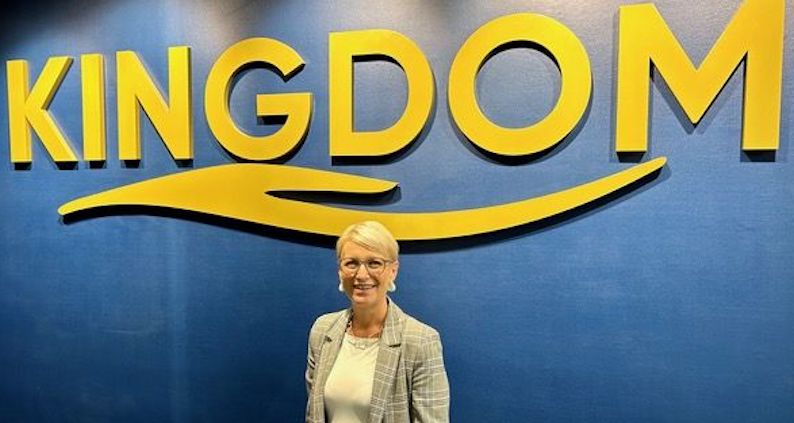 By Lucy Lloyd, Chief Services Officer, Kingdom Cleaning ...
"Artificial Intelligence is seemingly now everywhere in the working world, present across almost every sector and aspect of modern life.
The Facilities Management and Cleaning industry is already at the forefront of adopting this change, with stats showing 65% of FM companies are well underway and integrating these tools into their operations.
With adoption on this scale, at Kingdom Cleaning we recognise that AI integration is an opportunity we can't afford to get wrong in the sector.
AI presents serious opportunities for organisations, with the ability to change the very nature of roles from the bottom up. But integrating these tools responsibly is just as important. It will require a commitment to upskilling, responsible AI usage and realising what this transition will look like for colleagues each day. Each of these components is vital to building a sector fit for the future, where we maximise the benefits of AI for all.
How we're integrating AI...
At Kingdom Cleaning we know AI can transform how we provide our services, with data-led decision-making affecting how and why we're deploying our resources.
For instance, we're currently collaborating with our clients to install AI-powered sensors across their facilities. In practice, this means tracking and measuring facility usage in real time. This way we're able to build a picture of how spaces are used, with footfall and peak hours as the main indicators of use. Through implementing these networks, AI agents can help us to understand what areas our clients actually need cleaned, and how many colleagues need to be assigned to a job on any given day.
This tailored service allows us to step away from repetitive rotas and deploy our resources more precisely and accurately. Rather than cleaning on a regular schedule or estimating what clients may need based on metrics such as square footage or number of rooms, we're responding to data in real time.
With data-led thinking informing us about our client's exact needs, teams can design bespoke service packages for each client and do away with outdated daily routines. By deploying our resources more accurately - we're taking guesswork out of the equation.
The closed-source vs open-source debate...
However, as with any new technology, responsible implementation is essential to maximise the benefits and mitigate the risks of new changes - before we rely too heavily on AI. With that being said, the main decision for many organisations is whether to employ a closed-source or open-source model in their operations.
At Kingdom Cleaning, we solely employ closed-source agents and recommend this measure is adopted more broadly by sector colleagues. Increasingly, data and the protection of it is a responsibility every organisation must take seriously. Cost-efficiency, customisation and flexibility may be easier in an open-source setting, but the increased protections of closed-source options are something we can't afford to miss out on.
With closed-source models being privately owned by the development company, they cannot be modified or rebuilt when accessed. Because of this, not only are these models more powerful but they don't feed input data to train future versions, ensuring your organisation and client are protected in all circumstances.
How roles within the industry are changing...
AI integration will also see changes in the nature of roles across the industry. At Kingdom Cleaning, our colleagues will need to master new skills in automation and data interpretation as they become more crucial parts in day-to-day operations. As employers, a commitment to upskilling your workforce will be vital to leverage the opportunities AI presents.
For example, the British Institute of Cleaning Science estimates hygiene specialists typically cover an average area of 230 - 250sq.m per hour. However, with the help of AI, this figure will soon be redundant. Roles in the future will instead be defined by how colleagues can manage automated systems and redirect them according to real-time data - not some figure restricted to physical effort.
In short, it makes roles more specialised and skilled. Colleagues will be able to dedicate their time to technical aspects of the role and boost work satisfaction as a result. This will create a new type of hygiene professional, one armed with both digital know-how and human technical precision.
These changes will reshape our sector, but the scale of these changes means AI integration is something we can't afford to get wrong. For us, it means a commitment to upskilling, using AI responsibly, and going where the data leads us."
23rd April 2026