 Cleanzine: your weekly cleaning and hygiene industry newsletter 14th May 2026 Issue no. 1210
Your industry news - first
The original and best - for over 20 years!
We strongly recommend viewing Cleanzine full size in your web browser. Click our masthead above to visit our website version.


Industrial & institutional cleaning chemicals market projected to hit USD 108.6 billion by 2033
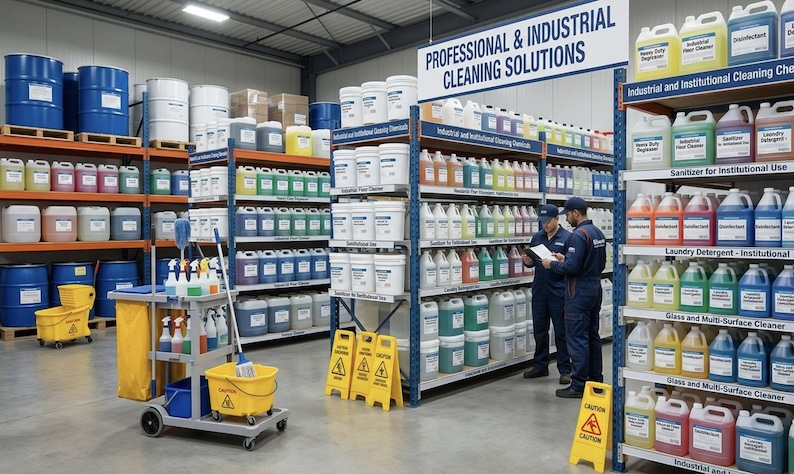 Growth Market Reports reveal that the global industrial & institutional cleaning chemicals market reached USD 63.1 billion in 2024, reflecting robust demand across diverse sectors. That demand is now driving a projected Compound Annual Growth Rate of 6.2% through to 2033, which should lead to the market reaching USD 108.6 billion by 2033.
This growth is primarily driven by the increasing emphasis on hygiene and sanitation - particularly in the healthcare, food & beverage, and hospitality industries, as well as stricter regulatory requirements for cleanliness and safety in public and private spaces, says the report.
The market has become a critical segment within the global chemicals and hygiene economy, says the report, which notes that the products are used across manufacturing plants, hospitals, hotels, food processing units, educational institutions, office complexes, transport hubs and public infrastructure – indeed anywhere requiring high-performance cleaning, sanitation, degreasing, odour control and regulatory compliance in demanding environments. Rising hygiene awareness, stricter workplace safety norms and the growing need for operational efficiency are clearly reshaping this market worldwide.
Key market growth drivers are acknowledged as being: rising hygiene standards across industries, expansion of food processing and foodservice sectors, manufacturing growth and equipment maintenance and the shift toward outsourced facilities management
The market is evolving beyond chemicals alone into integrated hygiene solutions, notes the report. Key innovations, which help clients lower operational costs while improving hygiene outcomes, include:
* Smart dispensing systems that reduce overuse
* IoT-connected janitorial systems for usage tracking
* Robotic floor cleaning supported by specialty chemicals
* Touchless sanitation technologies
* Faster acting disinfectants with lower residue levels
* Multi-surface concentrated cleaners for labour efficiency
Market challenges are also tackled in the report. These include:
• Raw material price volatility: Chemical feedstocks, packaging materials and transport costs remain volatile. Recent price increases announced by major chemical producers highlight cost pressures across the sector
• Regulatory complexity: Manufacturers must comply with chemical registration, labelling, worker safety,and environmental regulations that differ by country
• Intense competition: Global brands compete with regional suppliers and private-label manufacturers, placing pressure on margins
• Balancing performance and safety: Customers want powerful cleaning performance while minimising harsh ingredients, odours, residue and environmental harm.
The report concludes that the market is expected to maintain strong momentum over the coming decade, with growth driven by stricter hygiene standards, expanding commercial infrastructure, industrial automation, healthcare investment and sustainability transitions. Emerging economies will contribute significantly as urbanisation and institutional capacity increase.
Manufacturers that combine efficacy, safety, cost efficiency and environmental performance are likely to gain the greatest advantage. “The market is no longer just about cleaning products; it is becoming a strategic part of health management, operational productivity and ESG compliance,” notes the report.
https://growthmarketreports.com/
30th April 2026