 Cleanzine: your weekly cleaning and hygiene industry newsletter 13th August 2026 Issue no. 1223
Your industry news - first
The original and best - for over 20 years!
We strongly recommend viewing Cleanzine full size in your web browser. Click our masthead above to visit our website version.


Welcome to the Cleanzine

As I've long argued, if a recycling scheme's going to function really well, households and businesses need to know what goes where, in what form, and why. And when I say households and businesses, I mean not just the head honcho, but absolutely everyone in them who's likely to need to bin something. I'm frustrated when regular visitors to my home can't be bothered to follow the recycling rules that have been repeatedly explained to them, so I can only imagine how angry those whose responsibility it is to unload the various recycling bins at the depot must feel when they see the chaos within! As you might imagine, when news of the success of Caerphilly County Borough Council's 'enhanced recycling engagement' programme reached me, I was keen to learn more...
Over a 12-week period, recycling advisors worked with households as part of the first phase of the Welsh Council's expanded 'Section 46' process, (legislation that requires residents to dispose of waste in the correct bins). This combined monitoring of general waste bins with direct engagement, offering advice and support to help residents recycle more effectively. Some 3,172 properties were monitored, with a significant reduction in the number of general waste bins containing recyclable materials. Across five monitoring weeks, contamination levels steadily fell from 494 bins in the first week to just 63 by week five. What a brilliant result!
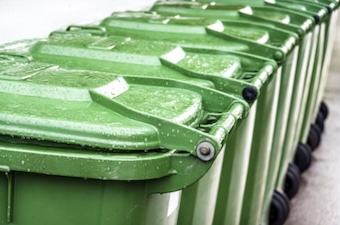
Food waste was identified as the most common recyclable material incorrectly dumped in general waste bins (that doesn't surprise me, since it's messy and takes the most effort) followed by cardboard and plastic bottles. The advisors focused on helping people understand how to use food waste and recycling services correctly, resulting in sustained improvements across the monitored areas.
Where issues persisted, further engagement was carried out, including the use of statutory notices. In total, 10 legal notices were issued, all of which were successfully resolved through compliance, meaning that Fixed Penalty Notices weren't required in any of the cases. This continues to demonstrate the Council's commitment to education and support first, with enforcement used only as a last resort - which is how it should be, in my view. Building on this progress, the programme will in future include a further 5,723 properties across several other communities. The council, quite rightly, is extremely encouraged by the results that have been achieved, arguing that they clearly show that residents want to do the right thing, and that the right support and guidance helps ensure that recyclable materials go into the correct bins. I do hope the scheme's rolled out all over, so I can tell my lazy visitors that if I get a Fixed Penalty Notice as a result of their reticence to do the right thing, payment will be down to them or they won't be returning!

 You can also follow us on X (Twitter) @cleanzine
Yours,

14th May 2026