 Cleanzine: your weekly cleaning and hygiene industry newsletter 13th August 2026 Issue no. 1223
Your industry news - first
The original and best - for over 20 years!
We strongly recommend viewing Cleanzine full size in your web browser. Click our masthead above to visit our website version.


How specialist wipes can help cleaning teams reduce chemical misuse
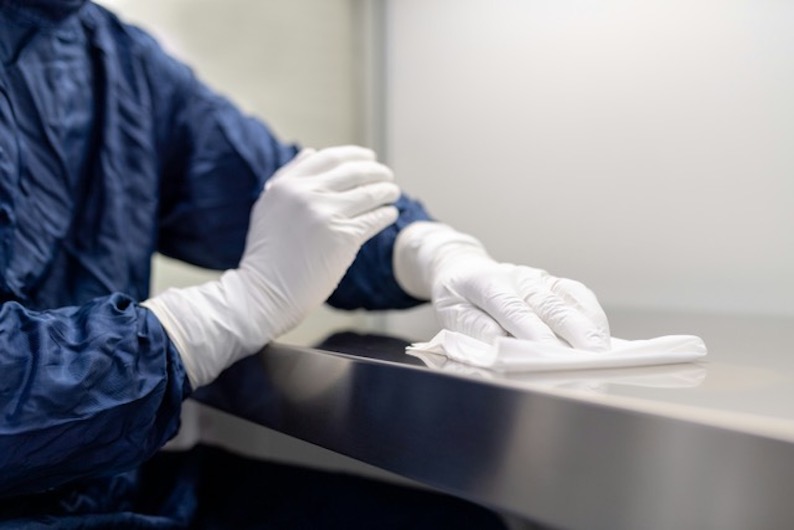 by Ian Adams, managing director of Staffordshire-based Speciality Wipes…
Chemical misuse often starts with a rushed shift, an unclear label or a spray bottle that has been refilled too many times. For cleaning and hygiene teams, the problem is rarely intent. It is usually the number of steps built into the process.
Measuring, mixing, decanting and spraying all create room for inconsistency. When mistakes happen, they can lead to wasted product, skin irritation, respiratory issues, damaged surfaces, poor cleaning performance and avoidable COSHH concerns.
Specialist wipes are not a substitute for training or supervision. Used in the right settings, they can reduce common misuse risks by giving teams a pre-dosed, task-specific product that is easier to apply consistently.
Why chemical misuse happens in cleaning teams…
In professional cleaning, misuse is often a systems problem. Staff may understand safe handling, but busy sites do not always give them perfect conditions.
Manual dilution is one of the biggest risk points. Concentrates can be cost-effective and reduce packaging, but they rely on the correct ratio every time. Too much product can leave residue, increase exposure and waste stock. Too little can affect cleaning performance.
Decanting adds another layer of risk. Spray bottles may lose their labels, be refilled without proper cleaning or move between areas where the same product is not suitable. A cleaner working across production areas, engineering workshops and industrial washrooms needs clear product separation, not guesswork.
Less experienced staff may also assume a stronger smell, wetter surface or heavier spray means a better clean. In reality, over-application can slow work down, damage surfaces and create unnecessary chemical exposure.
Training helps, but it does not remove every risk. High staff turnover, shift work, subcontracted labour and multilingual teams make consistency harder. Strong cleaning systems reduce the number of decisions staff have to make during routine tasks.
How specialist wipes reduce human error…
Specialist wipes help by building more control into the product itself. Instead of asking each operative to measure, mix and apply a chemical correctly, wipes provide a controlled amount of solution in a format designed for a specific task.
That matters in manufacturing facilities, industrial washrooms, shared tools, control panels, machinery touchpoints and maintenance areas, where repeatability is critical. If several cleaners are responsible for the same type of surface, the process should not change depending upon who filled the bottle or how much product they sprayed.
Pre-dosed wipes can reduce overuse because the quantity of solution is already set. They can also limit the need to pour from bulk containers, lowering the chance of splashes, spills and accidental contact with concentrates.
The strongest benefit is not convenience, but consistency. Task-specific wipes can be assigned to defined areas, such as electrical equipment, machinery touchpoints, production surfaces or maintenance benches. This helps prevent the wrong product from being used on the wrong material.
A specialist wipe can be viewed as a small process control. It does not remove the need for a cleaning specification, but it makes the correct method easier to follow when staff are under time pressure.
Safety, compliance and staff protection…
Chemical misuse is a health & safety issue. Cleaning products can contribute to skin irritation, burns, coughing, asthma symptoms and eye damage when handled or applied incorrectly. In the UK, COSHH duties require employers to control exposure to substances that may harm health.
Specialist wipes can support safer working by reducing direct handling of concentrated products. Fewer pouring and mixing tasks mean fewer opportunities for splashes, vapour exposure and incorrect combinations of chemicals. This is useful where storage is limited or mobile teams move between industrial units, production sites or plant rooms.
Even so, wipes should not be treated as automatically risk-free. Some are mild, while others contain active ingredients that require gloves, ventilation or strict surface controls. A wipe used for machinery cleaning, degreasing or industrial surface preparation is different from a general-purpose surface wipe. Labels and Safety Data Sheets still matter.
For cleaning managers, the practical value is that wipes make control measures easier to standardise. PPE requirements can be linked to a specific product. Staff can be trained on contact time, surface suitability and disposal. Audits can check whether the right wipe is being used in the right zone.
Reducing waste and product confusion…
The sustainability case for wipes needs nuance. Disposable products are not automatically greener than concentrates, reusable cloths or chemical-free systems. In some sites, a well-managed microfibre system may be the better option.
Where specialist wipes can help is by reducing wasted chemicals, failed dilutions, unnecessary re-cleaning and product confusion. If wipes prevent staff from overusing a stronger product or discarding incorrectly mixed solutions, they may reduce waste within the overall cleaning process.
The better question is not whether wipes are sustainable in isolation. It is whether they reduce total risk, waste and complexity for a specific task. Packaging, substrate material, active ingredients, disposal route and cleaning outcome all need to be considered.
Used selectively, wipes can simplify product ranges and make compliance easier. Used casually for every surface, they may add unnecessary waste.
Introducing specialist wipes effectively…
Cleaning teams should start with an audit of misuse risks. Look at dilution stations, unlabeled bottles, industrial washrooms, machinery touchpoints, shared equipment and areas where staff regularly switch between tasks.
Then match the wipes to the job. Check surface compatibility, contact time, PPE requirements, active ingredients and disposal instructions. If the wipe is being used for cleaning production equipment, tools or industrial surfaces, staff must know that one wipe cannot be stretched endlessly across multiple areas.
 Training should be practical. Show staff what one wipe is expected to cover, when to take a fresh wipe and where each product should be used. Keep wipes clearly separated from personal care wipes to avoid confusion.
Finally, review the results. Are there fewer unlabeled bottles? Has chemical usage become more predictable? Are supervisors seeing more consistent standards? If not, the product may be right, but the process may still need work.
Conclusion…
Specialist wipes help reduce chemical misuse by making correct application easier to repeat.
By limiting dilution, decanting and guesswork, they can improve consistency, support safer handling and make audits simpler. They still need to sit within proper COSHH assessment, SDS access, PPE, storage and training.
Their value lies in targeted use. Where controlled dosing and clear product selection matter, specialist wipes can turn chemical control into a practical part of everyday cleaning in industrial and manufacturing environments.
2nd July 2026