 Cleanzine: your weekly cleaning and hygiene industry newsletter 13th August 2026 Issue no. 1223
Your industry news - first
The original and best - for over 20 years!
We strongly recommend viewing Cleanzine full size in your web browser. Click our masthead above to visit our website version.


SOAPBOX: Food waste starts in the cold chain
 by Amit Sandhu, managing director, Paragon Logistics
As weekly household food waste collections roll out across England under the new Simpler Recycling rules, and businesses face their own food waste separation deadlines, Paragon Logistics is making the case that the country is aiming at the wrong end of the problem.
The London temperature-controlled courier and 3PL (third party logistics) operator argues that most avoidable food waste is decided long before the caddy, in the cold chain that moves and stores it.
"WRAP, (Waste & Resources Action Programme) puts the food UK shoppers bin at £17 billion a year, roughly £1,000 for a household of four, out of more than 10 million tonnes wasted annually. Households account for around 70% of that. Retail, the visible end of the chain, manages just 2%. Under Simpler Recycling, businesses with 10 or more staff have had to separate their food waste since 2025, with the smallest firms following by March 2027.
The rules make everyone measure waste at the bin, which is a start, but they treat the symptom. By the time a chilled ready meal reaches a food caddy, its fate was sealed days earlier, on a loading bay or in a warm van. Cold chain isn't just transport. It is food waste prevention. Keep the temperature tight from the supplier's door onward and you protect the shelf life the retailer is selling against.
The gap the rules don't address is visibility in transit. Avery Dennison's recent global study of 3,500 retailers and supply chain leaders found that 56% of businesses can't say how much food is lost while it is being moved, and 61% lack full visibility across their operations. Paragon runs its own employed, trained drivers rather than gig contractors, with live tracking and electronic proof of delivery, so a customer's cold chain stays under one operator from storage through to final delivery.
You can't fix what you can't measure. The brands that get ahead will treat the cold chain as a product, not an overhead. That is the difference between a chain that holds and one that quietly makes waste."
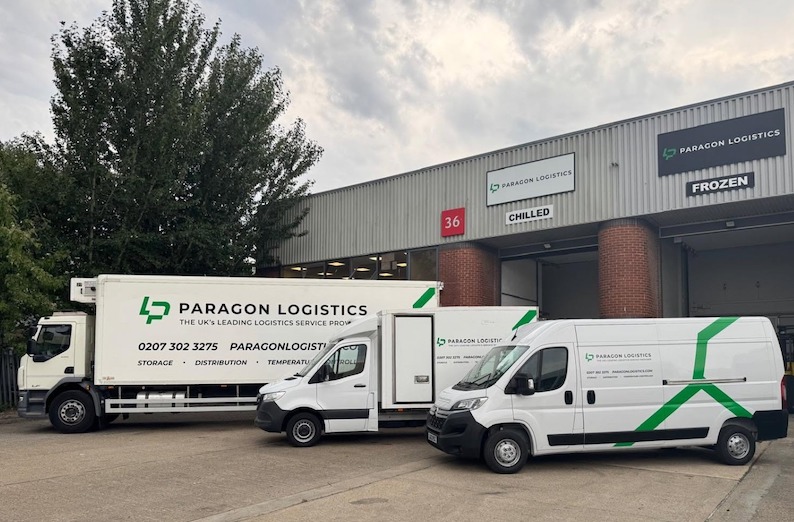
Paragon, which works across food and drinks 3PL and holds to HACCP and GDP-aligned standards for temperature-controlled work, has backed its argument with investment, recently adding 5,000sq.ft of chilled and frozen storage at its Greenford site in west London. The generator-backed, temperature-monitored space feeds directly into the company's chilled and frozen transport and cold storage, with continuous temperature logging across storage and delivery.
9th July 2026